
QIRUN ECOLOGY
Supernanometer Gas-Liquid Oxygenation Technology
Water Quality and Quantity Monitoring and Diagnosis
Rain and Sewage Separation Equipment Integration
Initial Rain Regulation Equipment Integration
Water Ecological Restoration and Construction
Daily Operation and Maintenance Of Rivers and Lakes
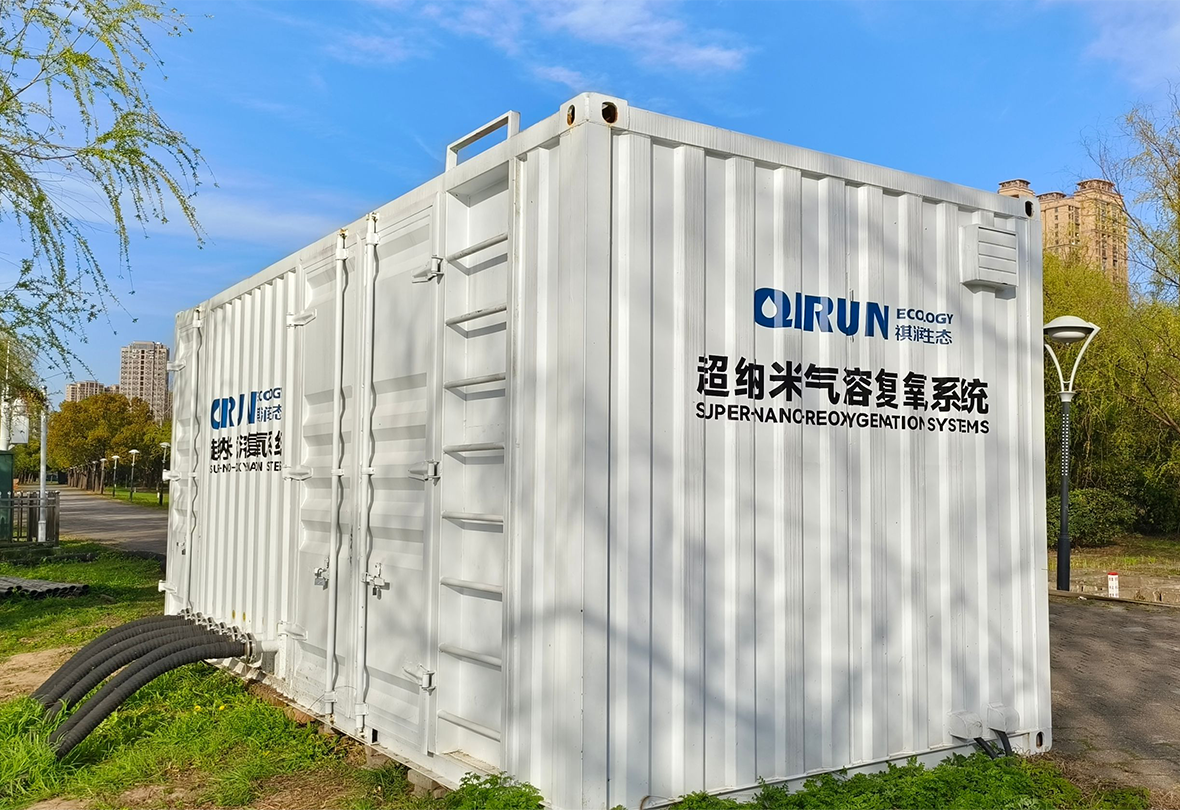
Super-nanometer aerosol oxygenation technology
Super nano-oxygenation is a highly efficient and pollution-free technological innovation. Its superiority lies in its ability to dissolve ultra-high concentrations of oxygen into water without visible bubbles, resulting in a long retention time and high oxygen utilization rate. This method injects high-concentration dissolved oxygen into the bottom of the water body, increasing the water body's redox potential, converting the reducing environment into an oxidizing environment, and inhibiting the generation of odorous gases such as hydrogen sulfide, ammonia nitrogen, and mercaptans. Simultaneously, it oxidizes ferrous ions into ferric ions, mineralizing the sediment. The black sediment gradually transforms into brownish-yellow, controlling internal nutrient release. Ferric ions can adsorb particulate matter for co-precipitation, improving water transparency. Continuous oxygenation promotes the recovery of aerobic microbial communities, especially nitrifying bacteria, accelerating the degradation of ammonia nitrogen in the water body, creating an oxygen-rich habitat, and restoring biodiversity.
Water quality and quantity monitoring and diagnosis
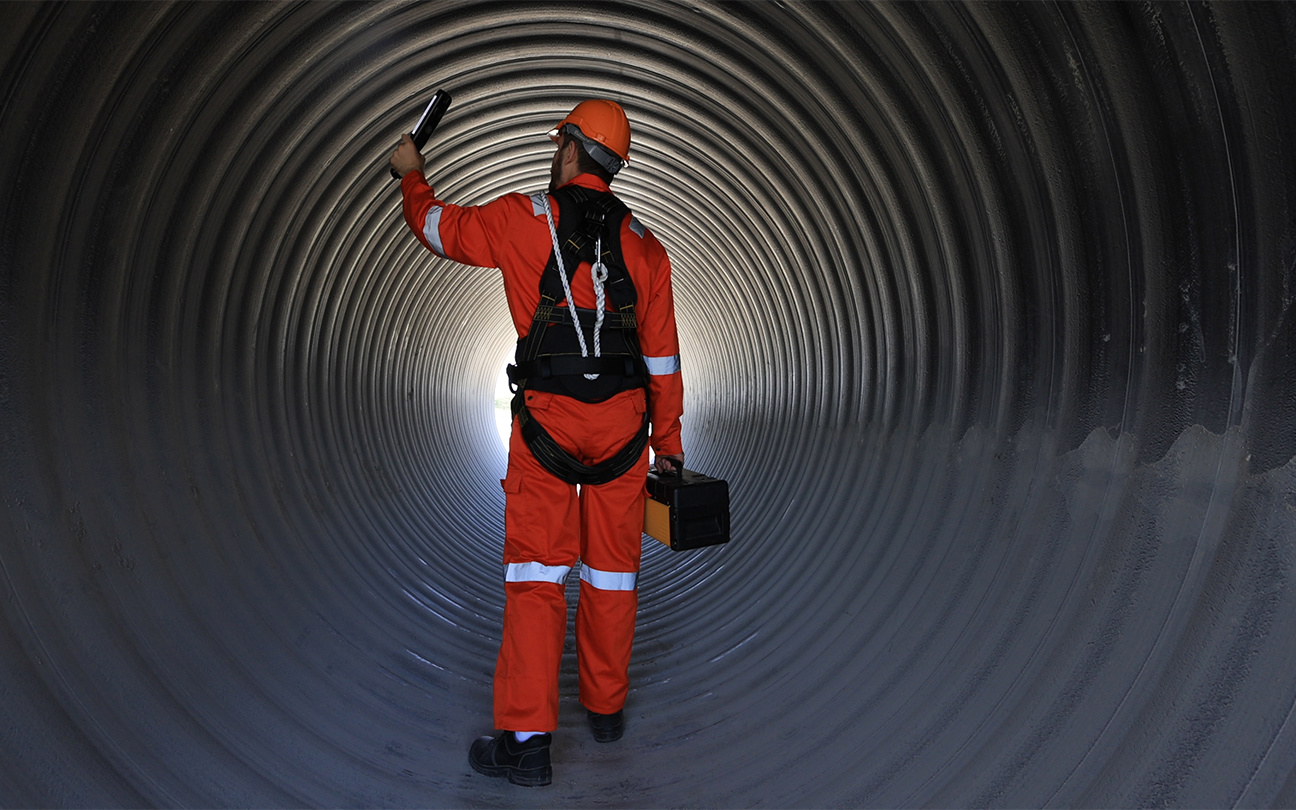
By deploying online monitoring equipment or conducting manual sampling at key nodes in the drainage system, real-time or regular collection of flow and water quality data is performed to analyze the operating status of the drainage network. Through the analysis of water quality and quantity changes, problems such as pipe network leakage, rainwater and sewage mixing, external water intrusion, illegal discharge of industrial wastewater, and direct discharge of domestic sewage can be diagnosed and identified, systematically analyzing the operating status of the drainage network. Combined with data modeling, the pipe network load capacity is assessed, and points of potential accumulation and overflow risks are located, providing a scientific basis for pipe network repair and rainwater and sewage separation renovation, and improving the management efficiency of the drainage system.
River and lake daily operation and maintenance and emergency response
River and lake health management should follow the principle of “30% treatment and 70% maintenance”, and establish a long-term operation and maintenance system of “prevention first and combination of prevention and treatment”. Based on traditional operation and maintenance (ecological regulation, facility maintenance, emergency management, etc.), our company integrates intelligent monitoring and intelligent decision-making technology to form an “air-ground-cloud” collaborative management model, realizing a closed-loop management of “monitoring-early warning-handling-evaluation”. This system can reduce operation and maintenance costs, improve emergency response efficiency, promote the transformation of river and lake management from passive treatment to active prevention and control, and ensure the long-term health of the water ecosystem.
Water ecological restoration and construction
Even after controlling external pollution, water bodies still face challenges from internal pollution (such as nutrient release from sediments, sediment resuspension, etc.) and ecosystem imbalance (such as the loss of key species and the disruption of trophic cascades), which can easily lead to repeated water quality problems and ecological degradation. Based on niche theory and steady-state transition mechanisms, our company creates oxygen-rich habitats, introduces aquatic vegetation, benthic animals, and indigenous fish, reconstructs the food web structure, restores biodiversity, achieves a dynamic balance of "producers + consumers + decomposers", enhances the system's self-purification capacity and ecological resilience, and ensures the long-term stability and sustainability of water bodies.
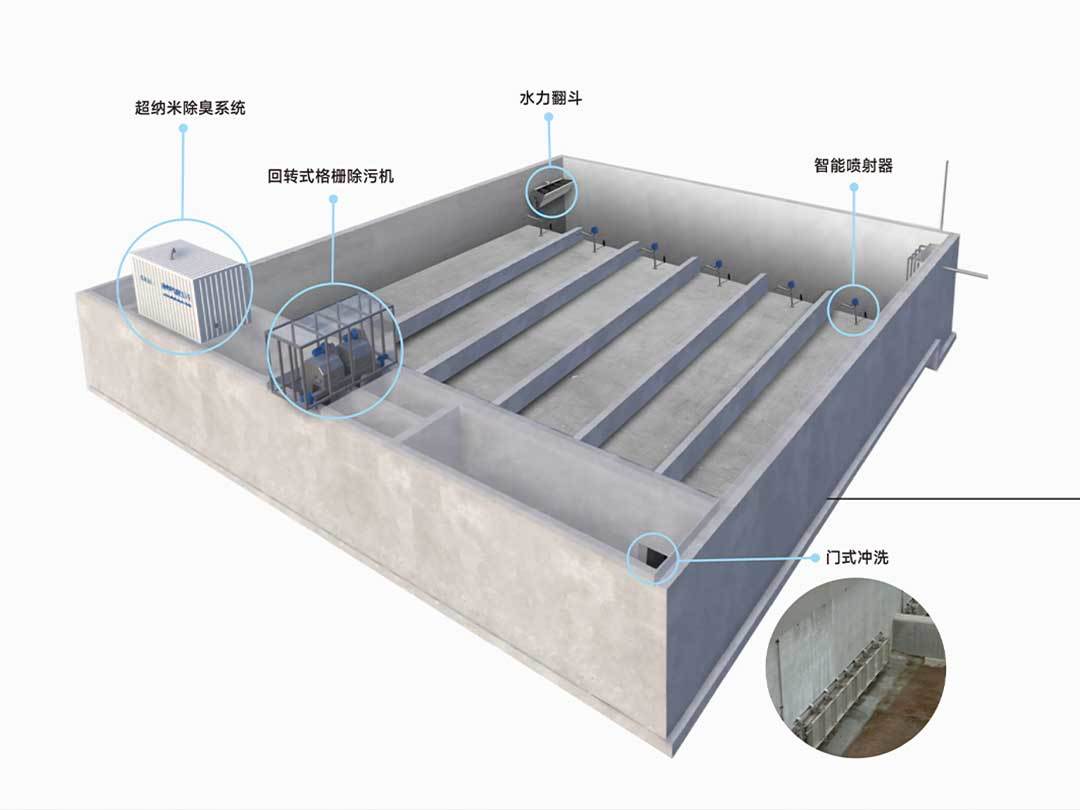
Initial rain storage equipment integration
Comprises detention pond equipment (screens, flushing gates, etc.), an online water quality monitoring system, and an automatic control system. Real-time monitoring is achieved through level sensors and water quality analyzers. The PLC automatically controls the inflow, outflow, and flushing processes. An ultra-nano gas aeration system is equipped for source odor removal. It has functions such as rainwater storage, pollution control, water purification, and intelligent scheduling. It can effectively reduce the initial rainwater pollution load, achieve peak-shaving discharge or resource utilization, and is a key facility for sponge city construction and urban waterlogging control.
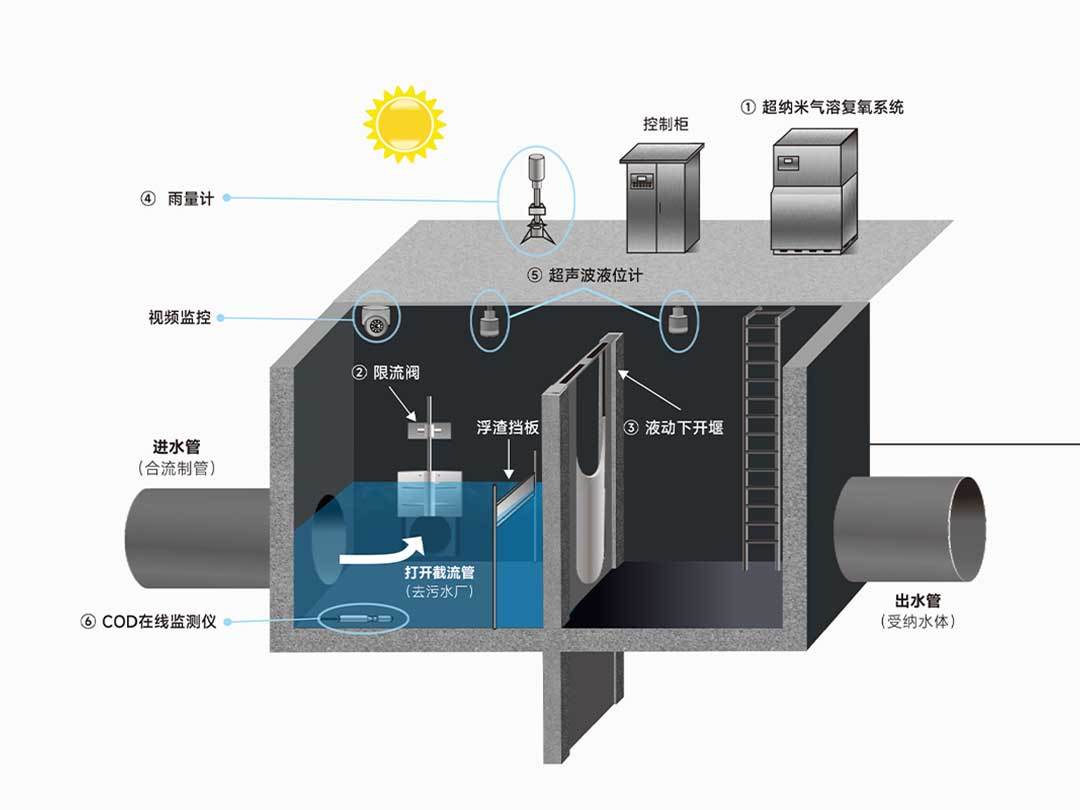
Rain and sewage separation equipment integration
Comprises intelligent interception well equipment (hydraulic flow control valves, bottom-opening weirs, rotary weirs, etc.), online monitoring instruments, and an automated control system. It monitors water quality and flow parameters in real-time using sensors, and uses PLC intelligent control to achieve precise separation of rainwater and sewage. It has sewage interception, flood prevention, and backflow prevention functions. Equipped with a remote monitoring platform, it enables visualization analysis of operating data, intelligent early warning, and remote control, effectively improving the efficiency of the drainage system, reducing overflow pollution, and is suitable for municipal drainage pipe network renovation and sponge city construction.